.webp)

Written by:
Journeymen Moving Team
Published:
September 30, 2026
Learn how to move a hot tub the right way, from disconnecting utilities to protecting your deck and driveway, plus when to call in professional help.
Moving a hot tub takes more than a few strong friends and a dolly. Between the drain and disconnect steps, the sheer weight even when empty, and the real risk of damaging a deck, doorway, or your own back, a hot tub is one of the few household items where the "just muscle it" approach almost always goes wrong. Here's what actually needs to happen, in order, whether you're relocating a spa across the yard or across the state.
An empty hot tub typically weighs somewhere between 400 and 1,000 pounds depending on size and construction, and that's before you account for the frame, pump equipment, and any built-in surround. Filled with water, even a mid-size spa can push past 3,000 pounds, which is exactly why draining it fully before any move is non-negotiable.
The weight isn't evenly distributed either. Most of the mass sits low in the shell and cabinet, and the equipment bay (pumps, heater, control pack) adds an awkward, off-center load that shifts if the tub is tilted the wrong way. This is the detail that trips up DIY moves: two or four people can technically lift the empty shell, but almost nobody can control it safely around a corner or up a step without the right straps and a dolly rated for the load.
Before a hot tub goes anywhere, it needs to be fully drained, disconnected from power, and stripped of any accessories that could snap or puncture during transport. Skipping any one of these steps is the most common reason spas arrive at a new location with cracked plumbing or a fried control panel.
Drain the tub completely using its built-in drain valve or a submersible pump, then run the jets briefly with the water off to clear residual water from the pipes. Trapped water left in the lines can freeze, leak, or shift the tub's balance mid-move, and it adds unnecessary weight you're trying to avoid.
Hot tubs are typically hardwired to a dedicated circuit, so this step usually means shutting off the breaker and having an electrician disconnect the hardwired line, not just unplugging a cord. If you're not confident working around a 240-volt circuit, this is a moment to bring in a professional rather than improvise.
Take off the cover, cover lifter, steps, and any loose jets or headrests, and pack them separately. Loose accessories left attached are the easiest thing to crack or lose during the move, and they add bulk that makes the tub harder to maneuver through tight spaces.
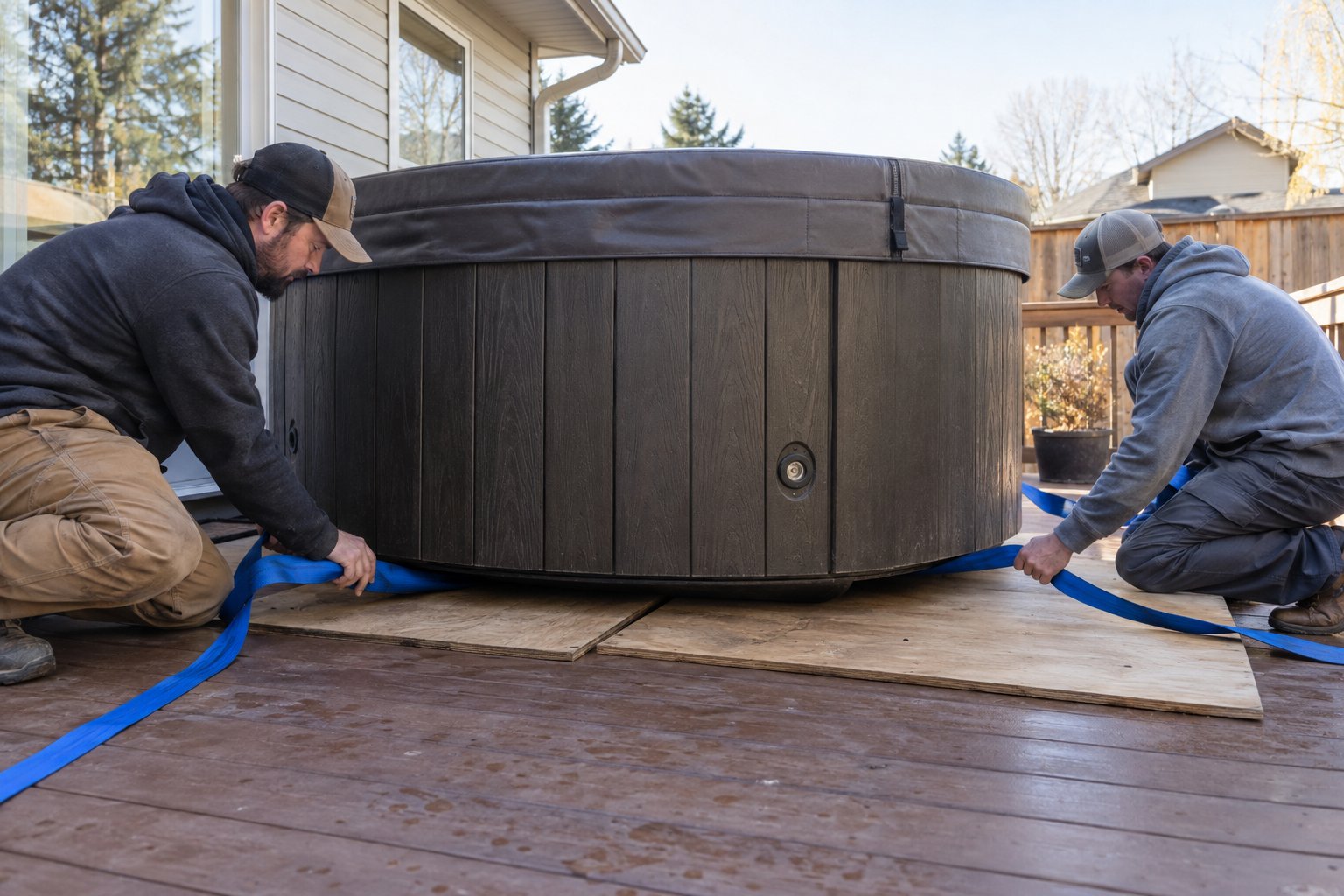
Moving a hot tub without damage requires a hand truck or dolly rated for several hundred pounds, moving straps, furniture sliders for hard flooring, and enough clear path width to get the tub through every doorway and turn along the route. Improvising with a flat dolly or bare hands is how decks crack and backs give out.
Measure every doorway, gate, and hallway the tub has to pass through before moving day, not after. A spa that's an inch too wide for a side gate means backtracking through the house, which multiplies the number of times it gets lifted, tilted, or set down on an unprotected surface. Plywood sheets or furniture sliders under the tub's feet protect wood decks and hardwood floors from gouges as it's walked or rolled across them.
A short move of an empty, lightweight spa across a flat, obstacle-free yard is sometimes manageable with enough people and the right straps. Anything involving stairs, tight turns, a heavier tub, or a move off the property is a job better handled by movers experienced with heavy and specialty items.
The math that matters here isn't just the tub's weight, it's what happens if something goes wrong mid-lift. A dropped hot tub can crack the shell, damage plumbing that isn't cheap to replace, or injure whoever's underneath it when it shifts. Our hot tub moving service is built around exactly this kind of load: the right equipment, a route planned in advance, and enough hands to keep the tub level the entire way. If your move also involves other oversized or awkward items, our heavy and specialty item moving team handles those the same way, with equipment and technique built for weight, not just size.
For a move beyond your own property, a hot tub needs to be secured to a pallet or dolly, wrapped to protect the exterior finish, and loaded so it can't shift or tip during transit. This matters more the farther the tub is traveling, since hours on the road amplify any instability in how it's braced.
Wrap the cabinet and shell in moving blankets to guard against scuffs, then strap the tub to whatever it's resting on so it can't rock during loading or the drive itself. If you're relocating between our service areas, for example from a home near Bowling Green to a new property closer to Lexington, the same bracing and route-planning principles apply regardless of distance: the tub needs to arrive in the same condition it left in, not just in one piece.
Once the tub is unloaded, don't fill or power it back on right away. Let it sit for a few hours to settle and check for any shifted plumbing before reconnecting power and refilling, so any issue shows up before the water does.
If you'd rather not gamble on any part of this process, get in touch and we'll walk you through what a hot tub move looks like for your specific setup. You can get a moving quote in a few minutes and find out what professional handling actually costs before you commit to doing it yourself.
It depends on the tub's size and the route. A small, fully drained spa on flat ground might be manageable for two or three strong people with a dolly, but anything with stairs, turns, or a heavier build really needs more hands and proper equipment to avoid injury or damage.
Yes. A full hot tub can weigh well over a ton, and moving it with water inside risks cracking the shell, straining the frame, and making the tub impossible to control safely. Always drain it fully and clear the jets before any move.
No, not safely. Most hot tubs are hardwired to a dedicated circuit, so the breaker needs to be shut off and the line disconnected, ideally by an electrician, before the tub is moved at all.
It can, if the tub is dragged or set down without protection. Using furniture sliders, plywood sheets, or a properly rated dolly keeps the tub's weight from gouging or cracking deck boards as it's moved across them.
Give it a few hours to settle and let you check hoses, fittings, and the equipment bay for anything that shifted in transit before reconnecting power and refilling. Refilling too soon can mask a leak that only shows up under water pressure.
Not every move needs the same thing. Tell us what you need — full-service packing, a hand loading a rental truck, or help with one heavy or fragile item — and we'll build the plan around it.
Moving Kentucky Families and Military Members With Care Through Every Step, From Local Moves to New BeginningsWhether you're moving across town, across Kentucky, or starting somewhere completely new, our team is here to help make the process easier from the first box to the final unload.






.webp)
.jpg)
.png)
.webp)
.jpg)