.webp)

Written by:
Journeymen Moving Team
Published:
September 2, 2026
Learn how to pack fragile items for moving, from glassware to electronics, with box choices, cushioning methods, and labeling tips that prevent breakage.
Fragile items survive a move when they have their own dedicated cushioning, sit in a box sized for their weight rather than a generic one, and get labeled clearly enough that every person handling them knows to slow down. Most breakage happens not from a dramatic drop, but from small items shifting inside a half-empty box over hundreds of miles of road vibration. Get the packing right at the start and you skip the heartbreak at the other end.
Below is a practical, room-agnostic guide to packing the items people worry about most: glassware, dishware, electronics, mirrors, artwork, and anything else that can't be replaced with a trip to the store. This isn't a room-by-room checklist. It's built around the item types themselves, since a wine glass and a flat-screen TV need completely different protection even if they're sitting in the same cabinet.
Fragile items break mostly from movement inside the box, not from the box itself being dropped. When there's empty space around an item, it rattles against the box walls or other contents every time the truck turns, brakes, or hits a pothole, and that repeated small-scale impact is what cracks glass and dents corners.
The second most common cause is stacking weight wrong. A heavy item placed on top of a lighter, more delicate one will slowly crush it over a multi-hour drive, even if nothing looks wrong when the box is loaded. Understanding these two failure points changes how you pack: the goal is zero movement inside the box and weight distributed from heavy at the bottom to light at the top.
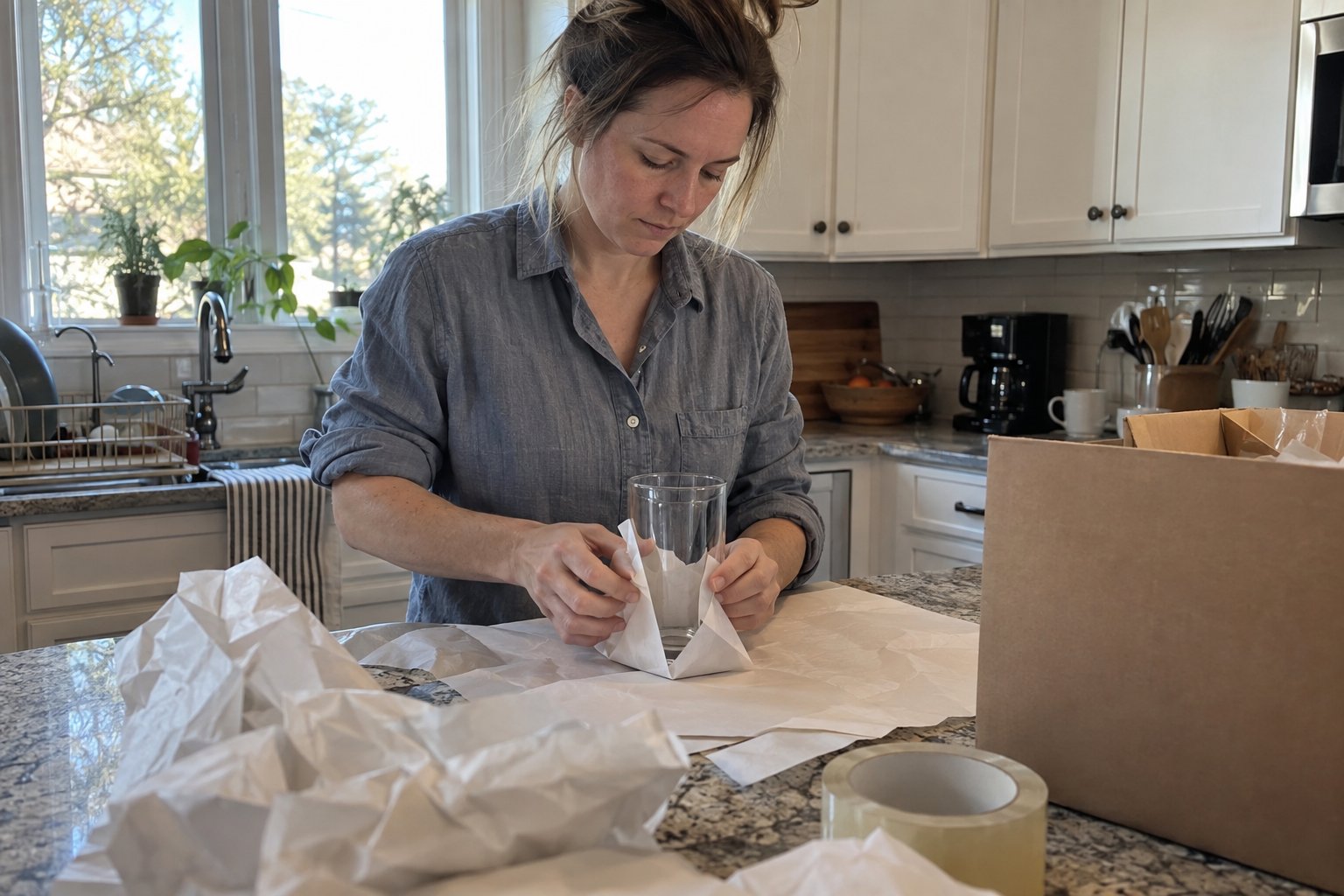
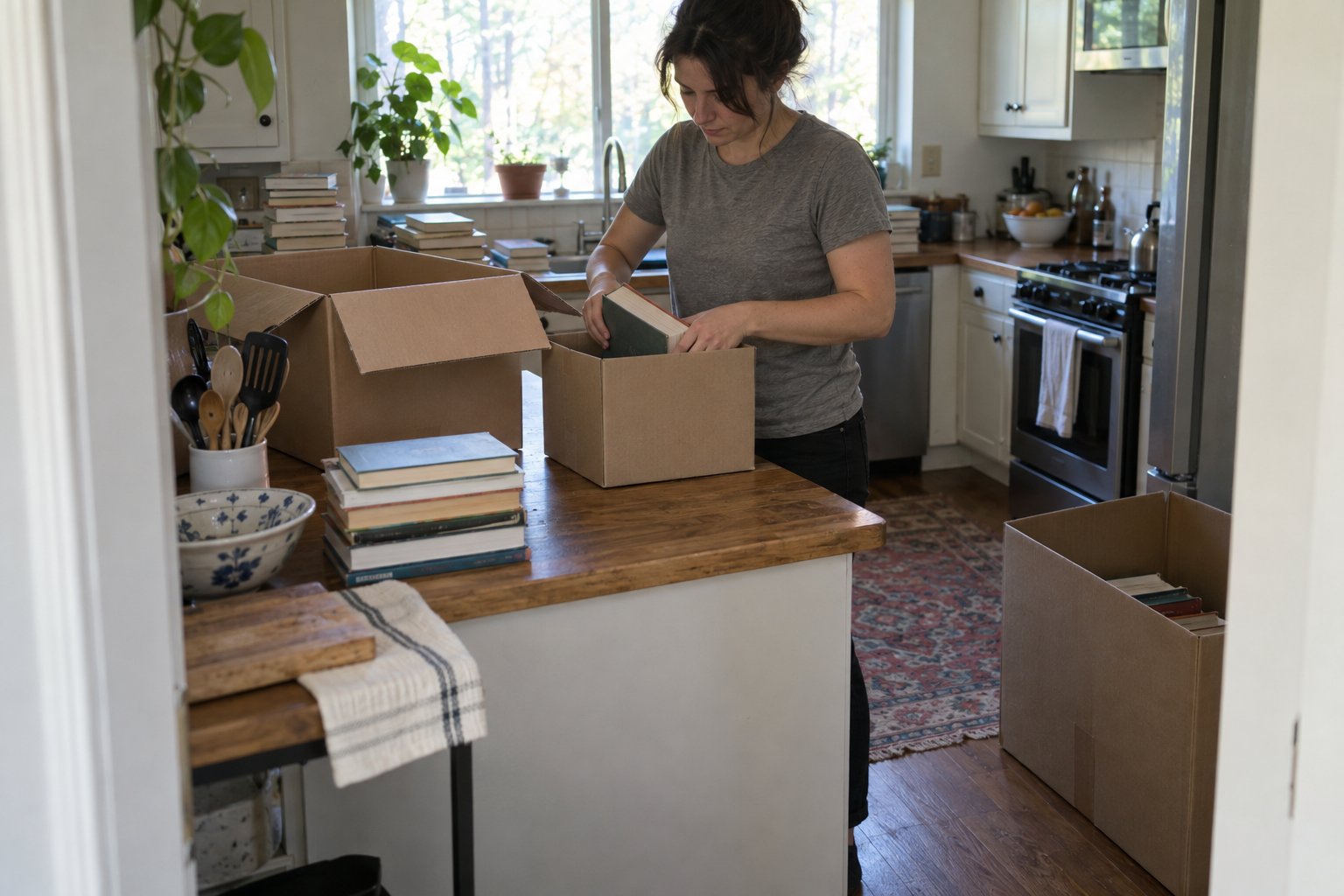
Wrap each glass or plate individually in packing paper before it goes anywhere near a box, and never let two pieces of glass or ceramic touch each other directly. Dish-pack (also called a "dish barrel") boxes have thicker walls than standard moving boxes and are worth using for your kitchen and glassware specifically.
Keep dish-pack boxes under 50 pounds. It's tempting to fill one large box with an entire cabinet's worth of dishes, but a box that's too heavy to lift safely also flexes more in transit, which increases the chance of internal shifting.
Electronics travel best in their original manufacturer boxes if you kept them, since those are molded to the exact item and prevent internal movement almost perfectly. If you don't have the original packaging, use a box only slightly larger than the item and pack the gaps tightly with foam or bundled soft goods like towels.
A few specifics that matter more for electronics than for other fragile items:
Flat glass and framed items need to travel on their edge, never flat, and never with weight stacked on top. Mirror boxes (telescoping cardboard boxes made specifically for flat items) are the safest option, and a cardboard "X" of masking tape across the glass face helps contain shattering if the worst happens, though it won't prevent it.
For anything larger than what a standard mirror box can hold, sandwich the glass between two pieces of cardboard cut slightly larger than the item, secure with tape around the edges (not on the glass itself), and wrap in a moving blanket. Label both sides "FRAGILE, GLASS, DO NOT LAY FLAT" so it's obvious no matter which way the item gets turned during loading.
A fragile box only stays protected if the label actually changes how someone handles it, so be specific rather than writing "FRAGILE" alone on every box in the house. When every box says the same thing, crews and helpers start ignoring the label entirely.
Instead, note what's inside and which way is up: "FRAGILE, GLASSWARE, THIS SIDE UP" tells a mover something they can act on. On loading day, fragile boxes should go on top of heavier furniture and boxes, never underneath, and should be some of the last items loaded so they're also among the first off the truck. If you're using a professional packing service, ask the crew where fragile boxes will sit on the truck. A good crew will already have a plan for this, but it doesn't hurt to confirm before the last box goes on.
Packing fragile items yourself is fine for a handful of everyday glassware or décor if you have the time and the right supplies, but high-value or irreplaceable items (art, antiques, heirloom china, specialty electronics) are usually worth handing to a crew that packs them for a living. The cost difference is often smaller than people expect once you factor in the boxes, paper, and tape you'd otherwise buy yourself.
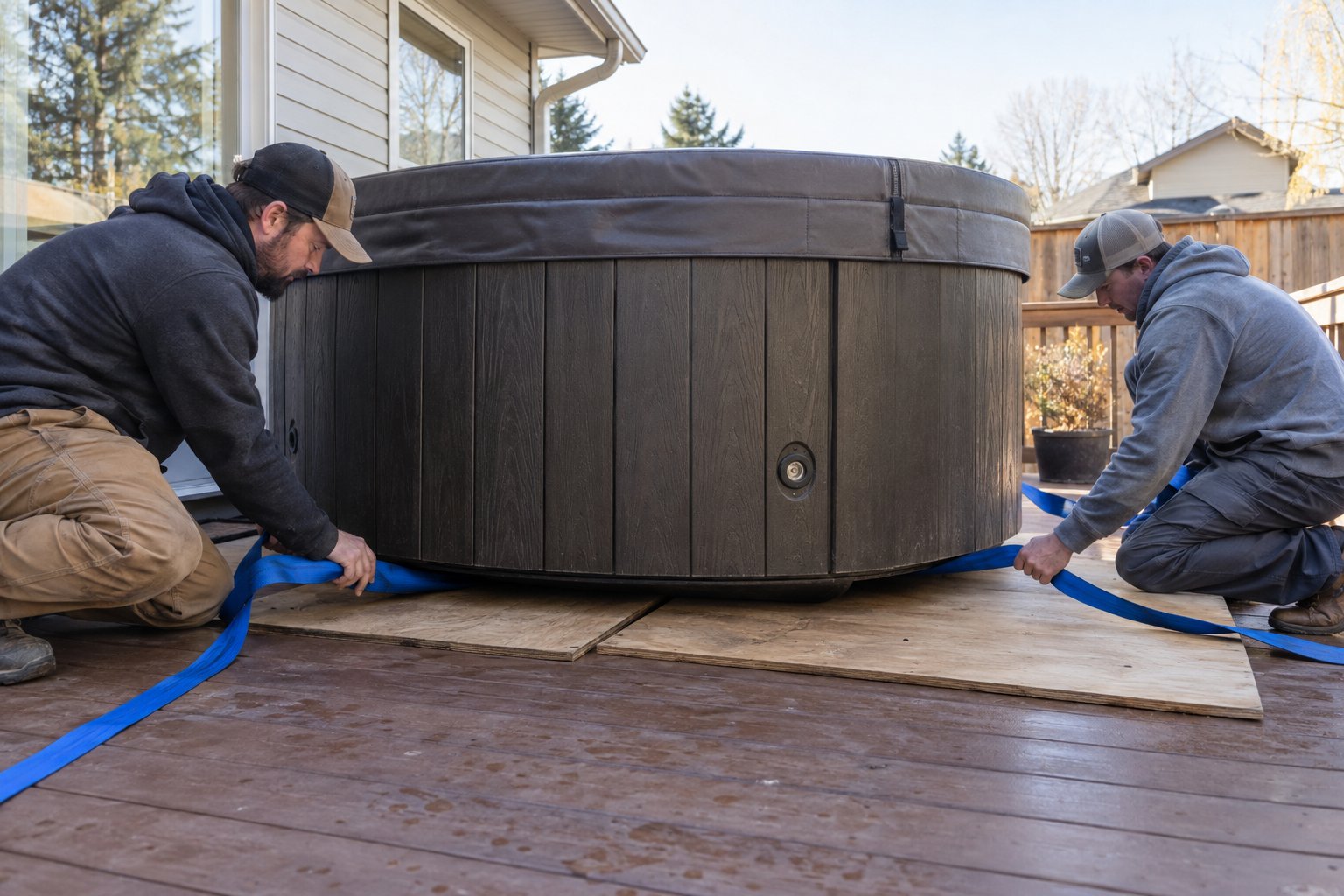
This is especially true for items that are heavy and fragile at the same time, like a large mirror, a glass dining table, or a piano. If you're relocating anything in that category, it's worth looking at heavy and specialty item moving rather than attempting it with a rented dolly and good intentions. For everything else, a full packing crew can wrap and box an entire kitchen or living room faster, and usually more securely, than most people manage on their own timeline. If you want the full workload off your plate before moving day, get a moving quote and ask what's included in a full-pack service.
Whichever route you choose, the underlying principles stay the same: individual cushioning, correct box sizing, weight distributed from heavy to light, and labels specific enough to be useful. Fragile items rarely break because someone was careless on purpose. They break because a box was packed in a hurry, and a few extra minutes per box is almost always the difference.
Standard boxes work for lightweight fragile items, but dish-pack boxes (thicker walls) and mirror boxes (telescoping, flat-item design) are worth the extra cost for glassware, china, and anything flat and glass. The thicker cardboard resists flexing, which is one of the main causes of breakage in transit.
As a rough guide, plan on wrapping each fragile item individually and adding a two to three inch cushion layer at the bottom and top of the box. For an average kitchen, that usually works out to several rolls of packing paper rather than a single small bundle, so it's worth overbuying slightly.
Yes, bundled towels, socks, and soft clothing work well as cushioning for dishes and small electronics, and it doubles as a way to pack linens you need to move anyway. Just make sure the fabric fully surrounds the item rather than sitting loosely against one side.
It's possible, but rushed packing is exactly when items get wrapped too loosely or boxes get overfilled. If fragile items are a priority, pack them a few days ahead and leave the last night for items you use daily, like toiletries and phone chargers.
Add extra cushioning if the box will be stacked under others in storage, and keep an inventory list of what's inside fragile boxes specifically, since they're easy to lose track of during a longer storage period. Store them off the floor if possible to avoid moisture damage.
Not every move needs the same thing. Tell us what you need — full-service packing, a hand loading a rental truck, or help with one heavy or fragile item — and we'll build the plan around it.
Moving Kentucky Families and Military Members With Care Through Every Step, From Local Moves to New BeginningsWhether you're moving across town, across Kentucky, or starting somewhere completely new, our team is here to help make the process easier from the first box to the final unload.

.webp)
.jpg)
.png)
.webp)
.jpg)