
Written by:
Journeymen Moving Team
Published:
October 21, 2026
Not sure what furniture to disassemble before a move? Here's how to decide what to take apart, what tools you need, and when to let pros handle it.
Furniture disassembly before a move isn't about taking everything apart, it's about knowing which pieces actually need it. Beds, large bookshelves, sectional sofas, and anything that won't clear a doorway or stairwell intact should come apart first. Dressers, nightstands, and most tables usually shouldn't, since taking them apart adds risk without saving much space or protecting them any better.
Getting this decision wrong in either direction costs you. Disassemble too much and you're left hunting for stripped screws and missing cam locks on move-in day. Disassemble too little and you risk a cracked door frame, a gouged stairwell wall, or a bed frame that simply won't fit around a landing. Here's how to tell the difference, piece by piece.
As a general rule, disassemble anything with a frame wider than a standard doorway (about 30 to 36 inches), anything with removable legs that stick out and catch on corners, and anything built in sections that were assembled in place. Everything else can usually be moved whole, wrapped and padded instead of broken down.
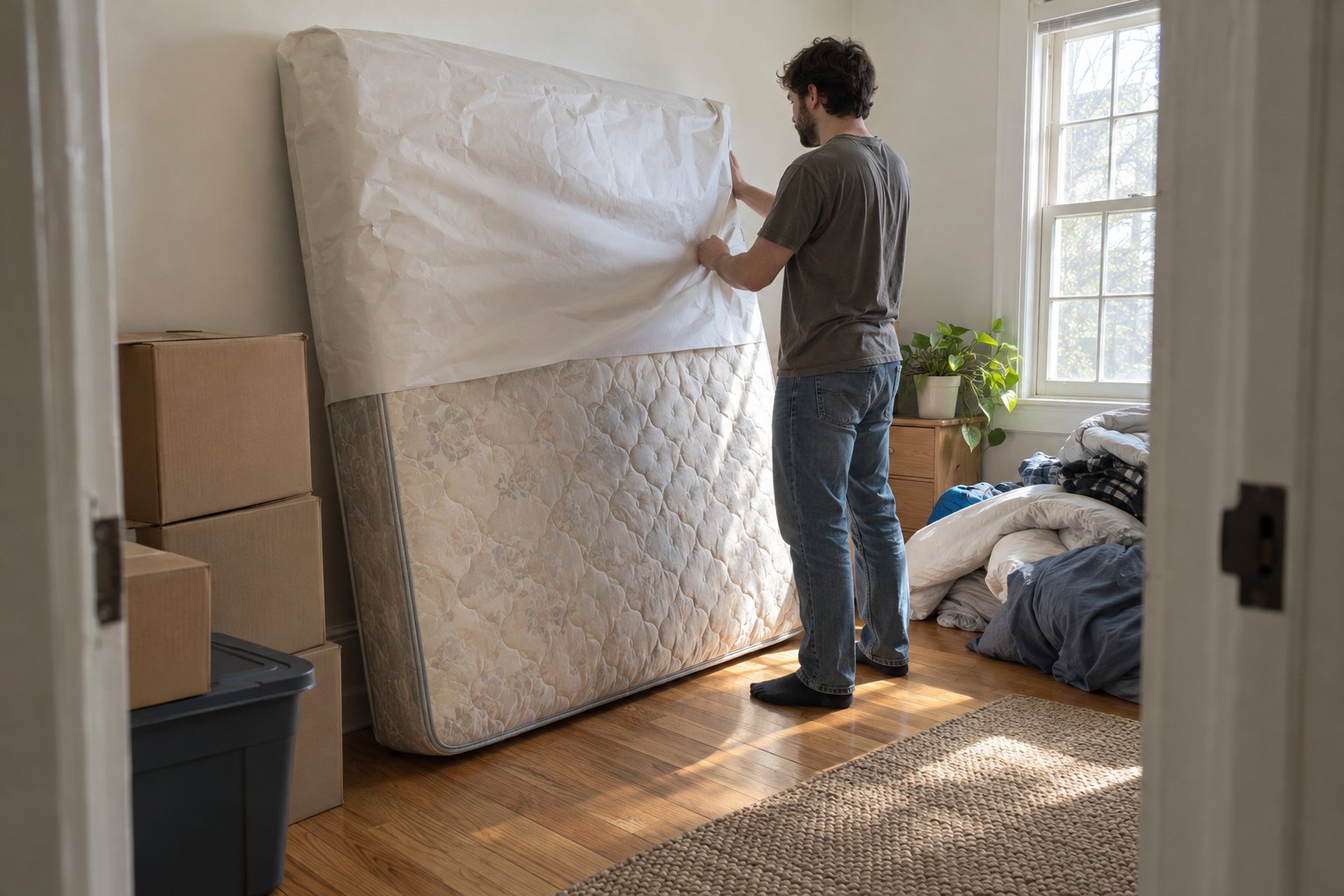
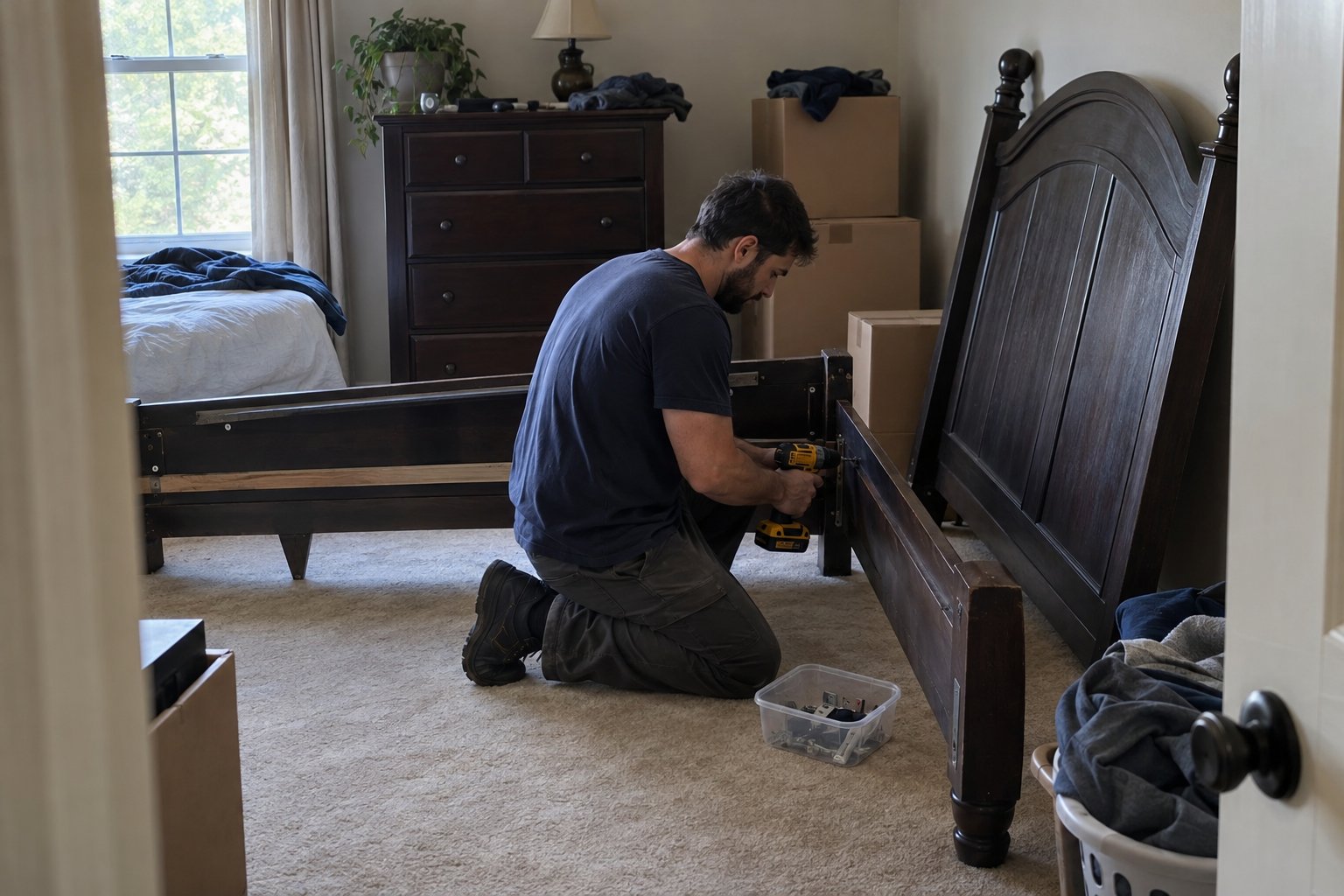
Bed frames are the most common disassembly job in any move. Headboards, footboards, and side rails almost always need to separate, and platform beds with slats should have those removed and bundled separately so they don't bow or snap in transit.
Tall bookshelves, armoires, and modular shelving units are often easier to carry in sections than as one tall, top-heavy piece. If a unit was flat-packed and assembled with cam locks or dowels originally, it's usually designed to come back apart the same way.
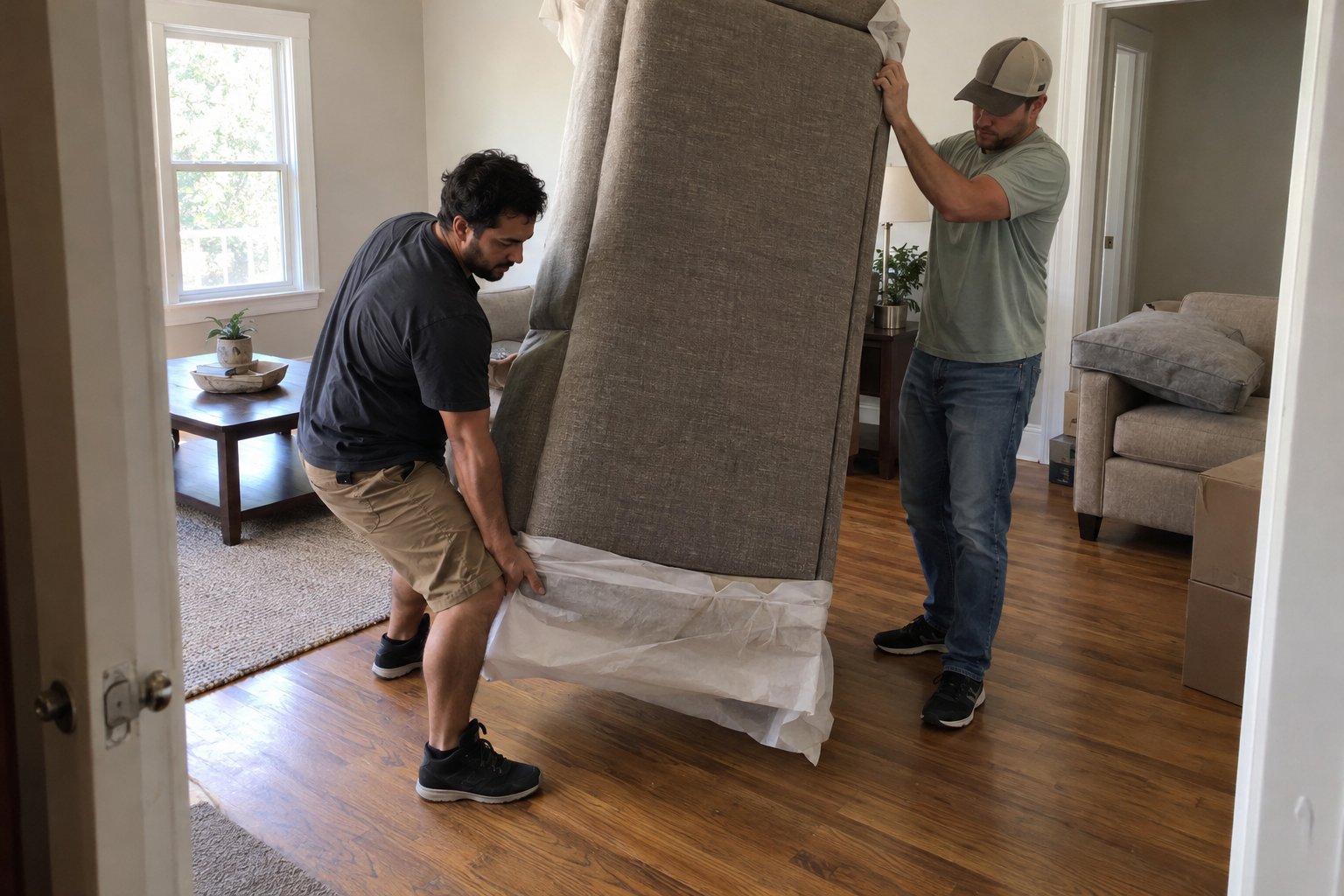
Sectionals are built to separate at the connector brackets between sections. Moving one as a single unit is awkward, heavy, and more likely to tear upholstery against a doorframe than moving each section on its own.
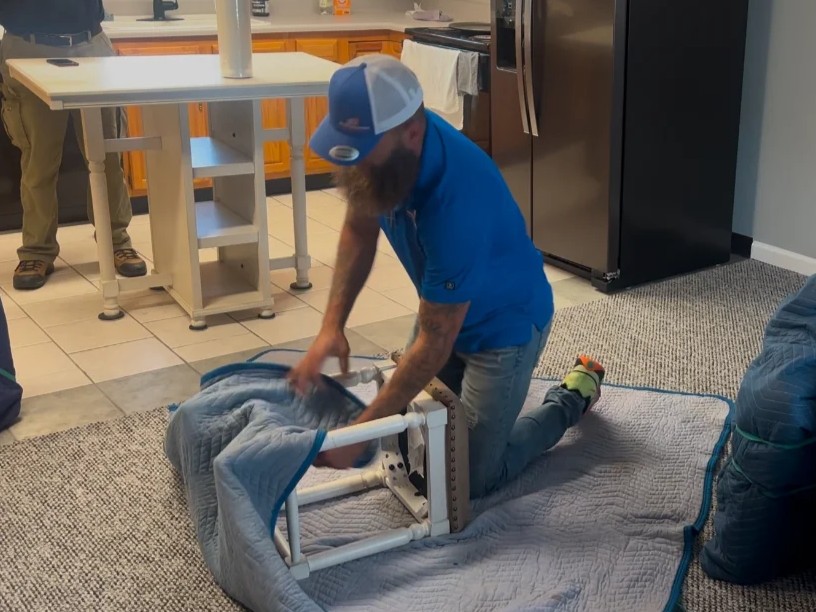
Removable table leaves should come out and travel flat, wrapped to protect the finish. Pedestal and trestle bases often detach from the tabletop with a few bolts, which makes the whole piece dramatically easier to carry through hallways.
Leave dressers, nightstands, solid wood tables without leaves, and most upholstered chairs assembled. Taking these apart rarely saves meaningful space, and reassembling drawer glides or chair joints correctly is harder than it looks, which makes them more likely to end up wobbly or misaligned afterward.
Dressers in particular hold their shape better when moved whole. Removing drawers to lighten the piece is fine, but there's no need to unscrew the frame itself unless it genuinely won't fit through a specific opening.
A basic kit covers almost every piece of residential furniture: a Phillips and flathead screwdriver, a set of hex keys (most flat-pack and bed frame hardware uses these), an adjustable wrench, and a rubber mallet for easing apart snug dowel joints without marking the wood. Keep a cordless drill with the right bits on hand too, since hand-driving dozens of screws adds up fast on moving day.
Painter's tape and a permanent marker matter as much as any tool. Label each part before you set it down, not after, because disassembled furniture pieces look far more alike than you'd expect once they're stacked against a wall.
Bag the hardware for each piece separately and label the bag with the furniture item and which section it belongs to, for example "bed frame, headboard bolts." Tape the bag directly to the largest flat part of that same piece of furniture so it travels with it instead of in a junk drawer or toolbox where it can get mixed up or left behind.
For small parts like shelf pins or cam locks, a labeled pill organizer or muffin tin works better than a single bag, since it keeps similar-looking pieces from different items separate from each other. Take a quick photo of any complex joint or bracket before you remove it. It takes ten seconds and saves real frustration when you're reassembling at the new place without the manual in hand.
Simple jobs, like removing bed rails or table leaves you've taken apart before, are reasonable to do yourself the day or two ahead of your move. Anything with hidden fasteners, modern furniture with proprietary hardware, or pieces you've never taken apart is safer left to your moving crew, since putting it back together wrong is often worse than not disassembling it at all.
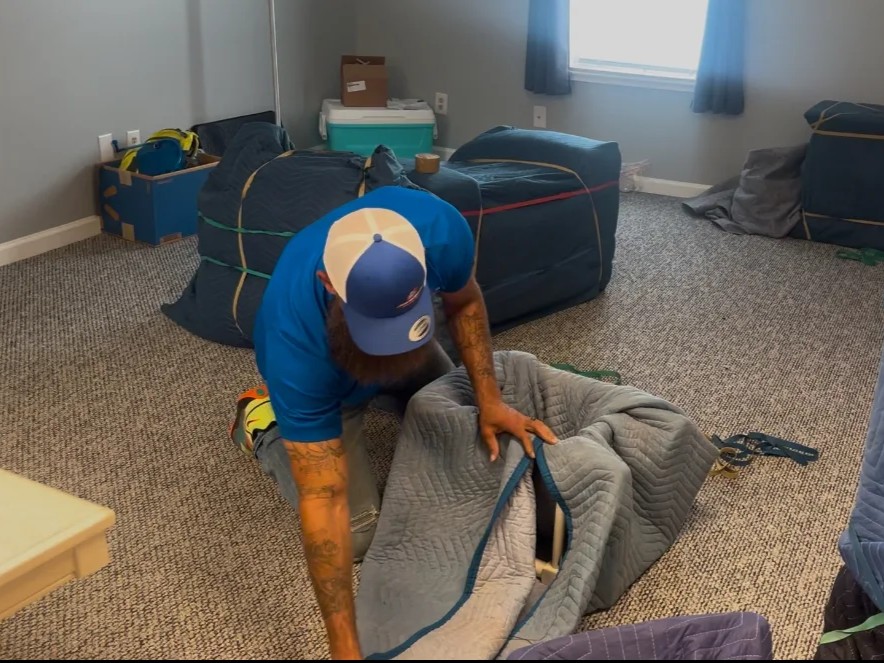
A moving crew that offers furniture disassembly and reassembly as part of the job will also know how to protect the furniture itself during the process, padding finished surfaces and keeping hardware with the correct piece instead of mixed into one bag for the whole house. That matters most for furniture you genuinely don't want to risk getting wrong, like a bed frame with a built-in storage mechanism or a sectional with hidden locking brackets.
If your move also involves a lot of fragile decor or breakables alongside the furniture, it's worth reading our guide on packing fragile items for moving so both get handled with the same level of care.
Disassemble furniture the day before moving day, not weeks ahead and not the morning of. Doing it too early means living without furniture you still need, and doing it the morning of adds time pressure right when your movers are trying to load efficiently.
If you're working with a local move timeline, build disassembly into the evening before so your crew can start loading pre-broken-down pieces first thing, rather than waiting around while beds and sectionals come apart on the clock.
Whatever you decide to handle yourself, it helps to get a clear picture of your whole move before moving day arrives. Request a free moving quote and let your crew know in advance which pieces need disassembly, so they can bring the right tools and plan the load accordingly.
Most moving crews that offer furniture disassembly and reassembly services will handle it as part of the move, especially for beds, sectionals, and larger wall units. It's worth confirming ahead of time which specific pieces you want them to take apart so they bring the right tools.
Smaller bed frames sometimes fit through standard doorways intact, but most queen and king frames need the headboard, footboard, and rails separated to clear hallways and stairwells safely without scraping walls or door frames.
Most hardware stores carry generic replacement screws, bolts, and cam locks that work for common furniture types, but matching the exact size can be time-consuming. Labeling and bagging hardware by piece before the move is the simplest way to avoid this problem entirely.
A single bed frame or dining table typically takes 15 to 30 minutes with basic tools. A full house with multiple beds, a sectional, and a large bookshelf can take two to three hours, so it's worth starting the evening before rather than the morning of.
It's riskier than standard hex-key or screw joints, since some modern furniture uses brackets or clips that aren't obvious from the outside. If you've never taken a specific piece apart before, it's safer to have an experienced crew handle it rather than risk damaging the frame or finish.
Not every move needs the same thing. Tell us what you need — full-service packing, a hand loading a rental truck, or help with one heavy or fragile item — and we'll build the plan around it.
Moving Kentucky Families and Military Members With Care Through Every Step, From Local Moves to New BeginningsWhether you're moving across town, across Kentucky, or starting somewhere completely new, our team is here to help make the process easier from the first box to the final unload.